Autelica

Human motion capture for robot learning.

Markerless 3D capture of people at work, from 2–5 ordinary cameras or drones. Delivered retargeted to your robot and validated in physics.

Captured Sep 30, 2026
Three drones (bottom). A virtual camera rebuilt from their footage (top).

Results

60 / 60Unitree G1 runs completed on drone-captured motion, 59 under randomized pushes, friction and latency
1.2 msCamera sync recovered from body motion, no timecode
0.3°Camera orientation from video vs. drone flight logs
Per clipHeld-out-camera error report on every delivery

Field result

From drone footage to a humanoid

  • Three off-the-shelf drones, unsynchronized and uncalibrated
  • Clocks, camera poses and 3D body recovered from the video alone
  • Retargeted to a Unitree G1, foot contact checked
  • Tracking policy validated over 60 randomized physics runs
Footage + simulation
Drone footage (left). Unitree G1 in MuJoCo with G1 torque limits (right).

The gap

Robot learning runs on human data that is rarely measured

93%of training frames in VioLA, a 2026 humanoid model, are first-person human video
Hands onlyHead cameras see the hands, not the body. Body pose is estimated afterwards.
Studio onlyMeasured whole-body motion still requires a mocap stage or a suit
Per siteEach new deployment site needs its own capture. Opt-in sessions build a licensed library.

Pilot

One site, one task, two weeks

01

Capture

2–5 cameras around the people doing the task. Drones outdoors. No markers or installation.

02

Reconstruct

Sync and calibration from body motion. Metric 3D body and hands. Held-out-camera grading.

03

Validate

Retargeting to your robot, contact checks, physics tests under randomized disturbances.

04

Scale

Motion, policies and an evaluation report per site, in LeRobot, HDF5 or JSON.

Requirements

  • Site contact and 2–5 people who perform the task
  • About 4 hours of access during normal operation
  • Robot model files and target tasks

Licensing

  • Pilot data: perpetual licence for commercial training and derived models
  • Library data: commercial licence by agreement, opt-in sessions only
  • No redistribution of raw video; provenance on every clip
  • Public sample: CC BY 4.0

Customers

Who it is for

Robot companies and integrators

  • Site-specific motion before deployment
  • Evaluation sets per site
  • Repeat capture per rollout

Facilities piloting robots

  • Half-day capture, no installation
  • Face and screen blurring, on-premises processing
  • Evaluation set for your robot vendor

Robot-learning teams

  • Measured whole-body motion: locomotion, lifting, carrying, sport
  • Per-clip quality grades
  • Commercially licensed library

Egocentric data collectors

  • Calibrated exocentric cameras alongside head cameras
  • Metric 3D body and hand labels, time-aligned
  • Measured auto-label error

Quality control

Held-out-camera validation

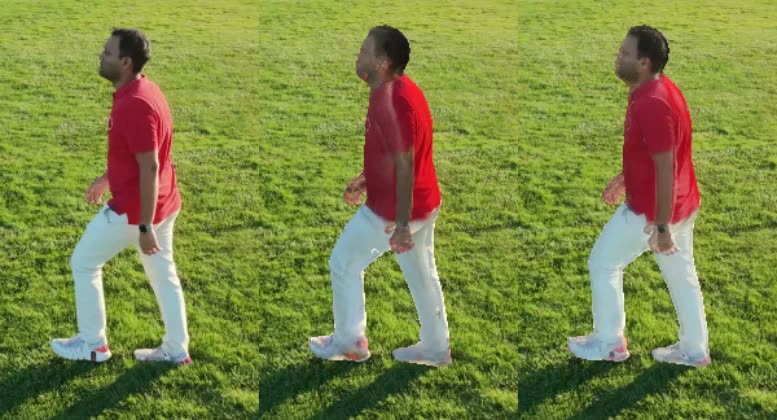
Each clip is reconstructed with one camera excluded, then compared with that camera’s footage. The residual, in pixels and millimetres, ships with the clip.
  • Indoors: 2–5 fixed cameras per work cell, aisle or bay
  • Outdoors: drones that follow the subject
  • Sensitive sites: on-premises processing, no footage leaves
Three views of a walking person: the real drone frame, the view rebuilt without that drone, and the view rebuilt with all three dronesDrone footage
Real frame (left). Rebuilt without this drone (middle). Rebuilt with all three (right).

FAQ

Frequently asked questions

What does Autelica deliver?

Metric 3D body and hand motion of people performing a task, captured on site with 2–5 ordinary cameras or drones, retargeted to your robot and validated in physics simulation.

Do subjects wear markers or suits?

No. Cameras are synchronized and calibrated from the subjects’ own motion. No markers, suits or calibration targets.

How accurate is it?

Body joints: about 52 mm against a three-camera outdoor reference (ASPset-510). Hands: 17–19 mm at about 2 m (Harmony4D, evaluation only). Camera sync: 1.2 ms median. Every clip includes a held-out-camera error report.

Which robots are supported?

Unitree G1 (29 DoF) today. Other embodiments are scoped per pilot.

What is in each clip?

Source video, camera calibration, 3D body and hand keypoints in metres, error report, retargeted robot trajectory and physics-validation results. LeRobot, HDF5 or MP4 with JSON.

What does a pilot involve?

One site and one task. About 4 hours on site with 2–5 people who perform the task; robot-ready motion and an evaluation report in about two weeks.

Has it run on a real robot?

Not yet. Results to date are in MuJoCo with randomized pushes, friction and control latency. Hardware validation is next.

How is privacy handled?

Written consent from every subject, optional face and screen blurring, and on-premises processing for sensitive sites.

Who is behind Autelica?

Founder Rohan Rao co-authored the IROS 2021 paper from Carnegie Mellon’s AirLab on 3D human reconstruction with collaborating aerial cameras. Based in San Francisco.

Used only to respond to this request.